
Drain Cleaning Medway
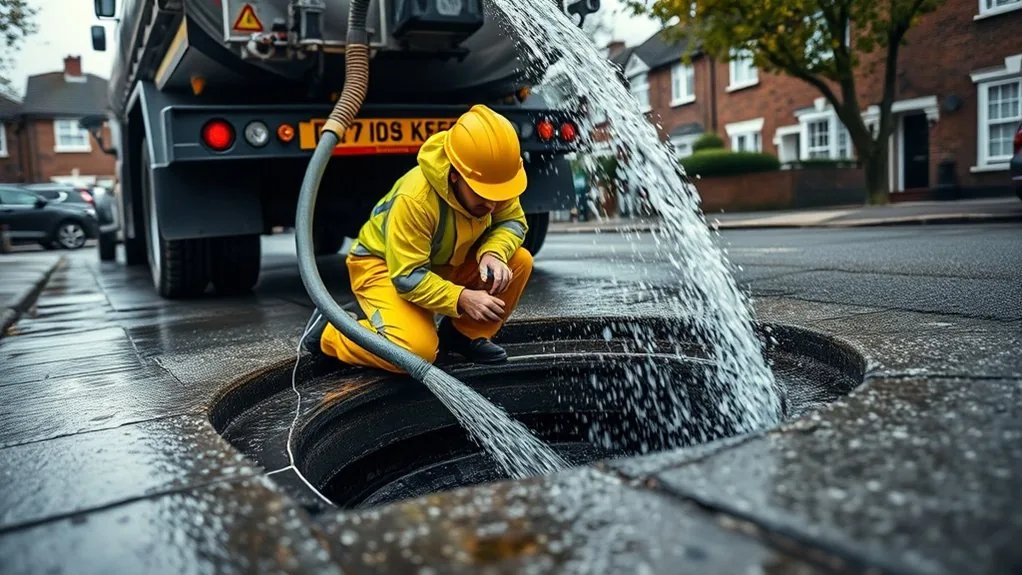
Struggling with slow drains, unpleasant odours, or gurgling sounds in your Medway property? Our engineers use high-pressure water jetting and mechanical rodding to safely clear blockages caused by grease, roots, and debris.
This process is often supported by CCTV inspections to assess pipe conditions. Call now for a fast quote or emergency callout.
When drains slow, smell, or back up, drain cleaning is the targeted process of removing blockages, built‑up debris, and residue from your pipework to restore full, safe flow. You’re not just clearing a nuisance; you’re restoring the hydraulic capacity and integrity of your drainage system.
Professional drain cleaning in Medway typically combines mechanical rodding, high‑pressure water jetting, and safe descaling methods to cut through grease, scale, silt, and intrusive roots. It’s carried out alongside drain maintenance planning and pipe inspection, often using CCTV cameras, to identify defects like cracks, misalignments, or collapsed sections. By treating cleaning as part of a structured maintenance regime, you reduce emergency call‑outs, protect your property from contamination, and extend the lifespan of your underground pipework.
When drains in your Medway property start emptying slowly, produce persistent unpleasant odours, or cause frequent toilet backups, you’re seeing clear indicators that internal pipe flow is being restricted. You might also hear gurgling noises in the pipes, which often signal trapped air caused by partial blockages or developing obstructions. Recognising these warning signs early lets you arrange professional drain cleaning before minor issues escalate into overflows, structural damage, or hygiene risks.
Although a slightly slow sink or bath might seem harmless, sluggish drains are one of the clearest early signs you need professional drain cleaning in your Medway home. Water pooling around plugholes, gurgling as it drains, or needing to plunge regularly indicates partial blockages building along the pipe walls. Ignoring this can lead to complete clogs or overflowing fixtures.
Timely drain maintenance is essential. A technician can carry out a targeted pipe inspection to locate obstructions, confirm pipe condition, and choose the safest cleaning method. High‑pressure jetting removes grease, soap scum, and mineral deposits without damaging sound pipework, while rodding can break up more solid debris. Acting early protects your plumbing, minimises disruption, and reduces the risk of sudden, unsanitary backups.
Ever noticed a sour, musty, or sewage‑like smell lingering around your sinks, shower, or outside drains, even after cleaning the room? That’s often a clear indication of bacterial buildup, decomposing organic matter, or trapped wastewater gases inside your pipework. Simple air freshening isn’t enough; you need the source removed, not just masked.
Professional drain cleaning in Medway targets this at its origin, using mechanical rodding or high‑pressure jetting to clear biofilm, grease, and sludge safely.
| Issue | Technical Concern |
|---|---|
| Intermittent odours | Partially blocked or drying traps |
| Constant foul smells | Heavy biofilm and organic accumulation |
| Smell near external drains | Blocked gullies or surface water channels |
| Odour after rain | Overloaded or constricted drainage runs |
Comprehensive cleaning supports lasting odour removal and healthier indoor air.
Repeatedly reaching for the plunger, only for the toilet to block again days or even hours later, is a strong indication there’s a problem beyond the pan itself. Persistent backups usually mean partial obstruction in the branch line or main drain, not just a one‑off clog.
Effective toilet troubleshooting starts with noting patterns: slow refill, rising water levels before flushing away, or waste returning in connected fixtures. These are red flags that DIY plunging alone won’t resolve safely or reliably.
For reliable backup prevention, avoid chemical drain cleaners that can damage pipework and seals. Instead, arrange professional drain cleaning using high-pressure jetting or mechanical rodding to clear scale, wipes, and accumulated debris from the line, restoring full bore flow and reducing the risk of unsanitary overflows.
When pipework starts gurgling after you flush a toilet, drain a bath, or run the washing machine, it’s often an early warning that air’s fighting past a partial blockage in the drain. That trapped air indicates restricted flow and rising back-pressure in the system.
Gurgling can also link to poor venting, inconsistent water pressure, or incorrectly supported pipework. Don’t ignore it; left unresolved, it can progress to slow drains, foul smells, and overflows. Avoid chemical drain cleaners, which can damage pipework and joints.
| Symptom | What it Often Indicates |
|---|---|
| Gurgle after draining | Developing partial blockage |
| Gurgle + slow sinks | Main line restriction |
| Gurgle + odour | Trapped waste, venting problem |
| Night-time gurgling | Air ingress, negative pressure |
| Seasonal gurgling | Pipe insulation or ground-movement issues |
Professional jetting clears obstructions safely.
Clogged drains in Medway usually aren’t random; they’re caused by a handful of recurring issues that can often be identified and prevented. Poor drain maintenance lets fats, oils, and grease cool and solidify, creating stubborn pipe blockage that gradually slows the system. In bathrooms, hair binds with soap scum, forming dense plugs that standard plunging rarely clears safely or fully.
External pipe blockage often starts with tree roots seeking moisture through tiny cracks or joints, leading to structural damage if ignored. Old or misaligned pipework can also trap debris, accelerating blockages and increasing overflow risk.
When you call us for drain cleaning in Medway, we start with accurate diagnosis, often using CCTV inspection to pinpoint blockages and structural issues without unnecessary excavation. Based on what we find, we’ll select the safest and most effective method, whether that’s high-pressure water jetting or rodding and mechanical clearance. If the pipe is damaged, we’ll explain whether a localised repair or full relining is required to restore the system’s integrity.
Ever wondered what’s really going on inside a slow or repeatedly blocked drain? Before any cleaning method’s chosen, your system needs a clear, accurate diagnosis. We start with surface checks: access points, manholes, trap conditions, and any signs of structural stress or leakage. From there, we deploy CCTV inspection equipment, feeding a high‑resolution camera through the line to map pipe routes, identify blockages, and detect cracks, root ingress, or collapsed sections.
Although Video tutorials and DIY tips online might help you clear simple, accessible traps, they can’t match the safety and precision of a controlled CCTV survey. Our engineers record footage, document pipe condition, and provide a concise report, so any cleaning or repair work is targeted, compliant, and cost‑effective.
Sometimes the most efficient way to restore a drain in Medway is with high‑pressure water jetting, a controlled process that scours pipes from the inside without resorting to harsh chemicals. Using precisely regulated hydraulic pressure, we drive water through specialised jetting nozzles that cut through grease, silt, scale, and invasive deposits without damaging the pipe structure.
You’ll benefit from a method that doesn’t just clear a single obstruction; it restores internal bore and improves long‑term flow efficiency. Jetting is ideal for routine pipe maintenance, removing early build‑ups before they develop into full blockages or structural issues. Throughout, we monitor pressures, flow rates, and backflow to protect your property, ensure compliance with safety standards, and keep your drainage system operating reliably.
How do you clear a drain in Medway that’s obstructed by something water alone can’t shift? That’s where rodding and mechanical clearance come in. Using sectional drain rods with the correct heads, we physically break down stubborn pipe blockages such as compacted grease, wipes, and scale. Each rod is securely coupled, pushed, and rotated under controlled force to avoid joint damage or loss of equipment in the line.
We’ll first identify access points and confirm pipe direction, then select the safest rodding method for your system. Mechanical tools, like rotary cutters, are used where harder deposits demand extra power. You’ll also get targeted maintenance tips—such as waste segregation and periodic inspections—to reduce recurrence and keep your drains flowing efficiently.
Rodding and mechanical clearance resolve most blockages, but there are occasions when the underlying pipe damage in your Medway property needs more than cleaning. If our CCTV survey reveals cracked joints, collapsed sections, or root-compromised pipes, we’ll outline precise repair options and explain the safest way to restore integrity with minimal disruption.
Where structure is largely intact, we’ll often recommend relining procedures. These involve installing a resin-impregnated liner that’s cured in place, creating a seamless new pipe within the old one. It reduces excavation risks, shortens downtime, and improves flow.
If damage is severe or gradients are wrong, we’ll specify targeted excavation and replacement instead. In every case, you’ll get clear findings, costs, and safety controls before any repair proceeds.
Because blocked drains can escalate quickly into serious property damage, our engineers are deployed across Medway to provide a rapid, coordinated response whenever you call. You get local coverage with central scheduling, so the closest fully equipped unit is dispatched to you without delay.
Our vans carry high-pressure jetting systems, mechanical rodding tools, and CCTV cameras, allowing us to move straight from diagnosis to clearance. On arrival, we’ll complete a focused pipe inspection to pinpoint the obstruction, check structural condition, and confirm the safest clearance method.
Once the immediate issue is resolved, we’ll advise you on targeted drain maintenance to reduce recurrence, based on pipe material, gradient, and usage. Throughout, we prioritise safe working, contamination control, and protection of surrounding structures.
While blocked drains often seem like a simple household problem, the law in Medway draws a clear line between what you must maintain and what your water company must handle. As a rule, you’re responsible for drain maintenance inside your property boundary and for any private pipes serving only your home.
Shared drains, lateral drains running under pavements or roads, and public sewers are usually the water company’s responsibility, provided they serve more than one property. Plumbing regulations require you to keep your private system safe, accessible, and free‑flowing, and to use competent professionals for high‑pressure jetting or rodding.
If you’re unsure whether a blockage falls under your duty or the utility’s, a CCTV survey and plan check will identify ownership accurately.
Knowing who’s responsible for each section of pipe is only half the battle; the most reliable way to avoid disputes and emergency call‑outs is to stop blockages forming in the first place. Effective drain maintenance starts with what you put down sinks, toilets, and gullies. Don’t flush wipes, sanitary products, or pour fats and oils into your system; they cool, solidify, and constrict flow.
Use these plumbing tips as a routine checklist:
Fit strainers, schedule periodic inspections, and act early on slow drains or recurring gurgling.
When you need drain cleaning in Medway, you want a team that diagnoses accurately, fixes safely, and prevents repeat issues. You get that by choosing specialists who combine high-pressure jetting, rodding, and detailed pipe inspection to target the exact cause of the blockage, not just the symptom.
Our engineers use CCTV technology to map your system, verify pipe condition, and confirm that every obstruction is fully cleared. We apply controlled pressures and appropriate nozzles to protect joints, seals, and older pipework, reducing the risk of structural damage.
You’ll also benefit from planned drain maintenance options that minimise emergency callouts and extend the service life of your drainage network, helping you avoid contamination, flooding, and costly remedial works.
You’ll naturally want clear answers on how fast we can attend your property in Medway, what drain cleaning is likely to cost, and whether it’s safe to try anything yourself first. In this FAQ section, we’ll set out realistic response times, typical pricing factors, and simple checks you can carry out without risking damage or injury. We’ll also confirm exactly which areas of Medway we cover so you know if we can reach you.
Although every situation is different, we can usually respond to drain cleaning calls in Medway the same day, and often within a few hours for genuine emergencies such as sewage backing up or flooding risks. Our engineers prioritise incidents where property damage, contamination, or loss of essential services is likely.
For planned drain maintenance, we’ll schedule a convenient time slot, ensuring you get a precise arrival window rather than a vague all-day booking. Before starting work, we can carry out a targeted sewer inspection to locate blockages, structural defects, or root ingress, which helps minimise time on site and disruption.
Our vehicles are fully equipped for high-pressure jetting and rodding, so in most cases we resolve the problem on the first visit.
Drain cleaning costs in Medway typically depend on factors like the type of blockage, ease of access, pipe diameter, and whether specialist equipment such as high‑pressure jetting or CCTV surveys are required. As a guide, you’ll usually see straightforward domestic blockages starting from a fixed call‑out fee, with additional charges if the blockage is deep, extensive, or needs more than standard rodding.
Prices can rise when root ingress, collapsed pipes, or heavy scale build‑up demand prolonged jetting or investigation. Choosing a contractor who offers transparent, itemised quotes helps you compare like‑for‑like and avoid hidden extras. Ask about eco friendly solutions where possible, and request professional, risk‑aware DIY tips that won’t damage pipework, joints, or any existing lining systems.
Before calling out a professional and incurring the full cost of drain cleaning, it makes sense to assess what you can safely do yourself. Start with basic DIY tips: remove and clean plugholes, flush with hot water, and use a plunger with a good seal. Avoid chemical drain cleaners; they can damage pipework and create hazards for technicians.
Follow strict safety precautions: wear gloves and eye protection, never dismantle traps you can’t refit, and don’t insert improvised rods into pipework.
| Action | Safe for DIY? | When to Stop and Call Out |
|---|---|---|
| Plunging | Yes | No improvement after 10 mins |
| Cleaning traps | Yes, with tools | Leaks or cracked fittings |
| Boiling water flush | Yes for grease | Repeated rapid re-blocking |
| Wet vac use | Yes, if rated for water | Strong sewage odour |
| Any external drain | Usually no | Standing water, collapse risk |
You’re covered across most of Medway, including major towns, villages, and rural properties, but exact availability depends on access, time of day, and the type of drain issue. Our area coverage typically includes Ashford, Maidstone, Canterbury, Dover, Folkestone, Tonbridge, Tunbridge Wells, Gravesend, Dartford, Medway, Sittingbourne, Faversham, and surrounding communities.
To confirm service availability for your postcode, we’ll check travel time, parking or access for high-pressure jetting units, and any safety constraints, such as busy A-roads or confined spaces. If you’re near a county border, we’ll advise whether we can attend directly or refer you to a trusted partner.
Share your location, problem type, and urgency, and we’ll give you a clear yes/no and an accurate ETA.
High-pressure jetting can be safe for old clay or pitch fibre pipes if carefully controlled. It requires using low-to-moderate pressures, appropriate nozzle types, and correct jet angles based on the pipe material and condition. A CCTV survey should be done beforehand, and jetting must stop if any damage like cracks or deformation is detected, switching to gentler cleaning methods.
Yes, you can have drain cleaning done at night to avoid disrupting your business. Technicians use lighting and noise-controlled equipment, and follow safety procedures such as risk assessments and clear signage. Access arrangements are agreed in advance to protect staff, customers, and stock while the drainage is repaired.
Yes, we offer CCTV drain surveys both before and after cleaning. The initial survey identifies blockages and assesses the condition of the pipes. A follow-up survey after cleaning ensures debris has been removed and checks the structural integrity to prevent future issues.
Yes, drain cleaning will usually help reduce recurring bad smells from outside gullies. It removes blockages like silt, fat, and debris, which restores proper flow and prevents stagnant waste that causes odours. Trained engineers use methods such as high-pressure jetting and rodding, along with PPE and CCTV inspections, to ensure the gully is clear and structurally sound.
Yes, our drain cleaning methods are environmentally friendly and chemical-free. We use high-pressure water jetting with pure water and eco-friendly practices, followed by mechanical rodding to physically remove blockages. This method protects pipe integrity, reduces contamination risks, and helps keep soil and waterways safe while restoring flow effectively.
Popular drain brands used in the UK:
When water starts draining slowly or foul odours rise from sinks and gullies, it’s a clear sign your system needs professional attention today, not “sometime later.” Acting quickly helps prevent blockages from escalating into pipe damage, overflows, and potential contamination risks inside your property. You need targeted drain maintenance and precise pipe inspection so problems are identified and resolved before they become emergencies.
| Issue Type | Recommended Action |
|---|---|
| Recurrent slow flow | CCTV pipe inspection first |
| Known blockage | High-pressure jetting or rodding |
| Older pipework | Routine drain maintenance plan |